
our mission & History
Our Mission
The “I Have A Dream” Foundation - Milwaukee (IHDF) Mission is to empower studentsfrom historically marginalized communities to thrive at school, at home, and in the community by providing individualized social, emotional, academic, and family support from first grade to first job, along with guaranteed post-secondary tuition assistance.
Our vision
Our dream is a world where every child has equal access to the educational and career opportunities that will ignite their innate potential.

Our values
Integrity
IHDF-MKE enrolls an entire classroom at Milwaukee Academy of Science without an application, test score, or behavior screening, and commits to those Dream Scholars from first grade through their first job, including a guaranteed post-secondary tuition scholarship. A commitment that long requires honest accounting. IHDF-MKE measures what it claims, reports results accurately, including work that fell short of what was planned.
Community
IHDF-MKE has operated in Milwaukee since 2008 and is located inside Milwaukee Academy of Science, in the same building where Dream Scholars attend school each day. That proximity means IHDF-MKE staff are present in scholars’ daily lives rather than reachable only by appointment. Dream Scholars take part in service projects and leadership work in their own neighborhoods, which treats them as contributors now rather than only after graduation. IHDF-MKE depends on adults, organizations, and community partners across the city choosing to be involved, and organizing that involvement is central to our work.
Partnership
IHDF-MKE serves caretakers and siblings alongside scholars because a child&’s progress is connected to what the household manages. Parents and caretakers already do the largest share of this work, so the role of IHDF-MKE is to add capacity by supporting school systems, grade transitions, resources, and advocacy, rather than instructing families on how to raise their children. The same approach applies to mentors, volunteers, funders, and board members, whose sustained involvement makes a twelve-year commitment workable.
Adaptability
Mentors relocate, staff turns over, funding cycles shift, and family circumstances change over the course of twelve years. That’s why the commitment is held by IHDF-MKE, not by any one person or thing. When a relationship ends, IHDF-MKE works to put another in place. How we deliver our programs and resources also adapts: mentoring during the school day, after-school programming, outings when school is closed, and summer sessions that keep scholars engaged when school is out. When something is not working, IHDF-MKE changes it.
Well-being
Academic support is limited in what it can do for a child whose family is dealing with housing instability, health problems, or food insecurity, so IHDF-MKE pairs Dream Scholars and their families with wraparound support in housing, health and wellness, food security, and workforce development. Access to mental wellness support is part of standard programming rather than something arranged only when a child is struggling. The approach draws on hope science and the Children’s Hope Scale, which treat hope as a measurable and teachable skill: naming a goal and identifying a realistic path toward it.
two-generational strategy for success
Our two-generational (2Gen) approach is designed to provide both youth and their families with the necessary encouragement, support, access, and resources to succeed academically, socially, and economically. By integrating long-term wrap-around support, we strive to bridge equity and resource gaps, promoting stability and well-being that extends from 1st grade through to post-secondary education and the transition into the workforce.
Our Pillars
Our History
“An impulsive move on the part of one visionary man sparked a national movement to positively impact the lives of children in low-income communities from coast to coast…”
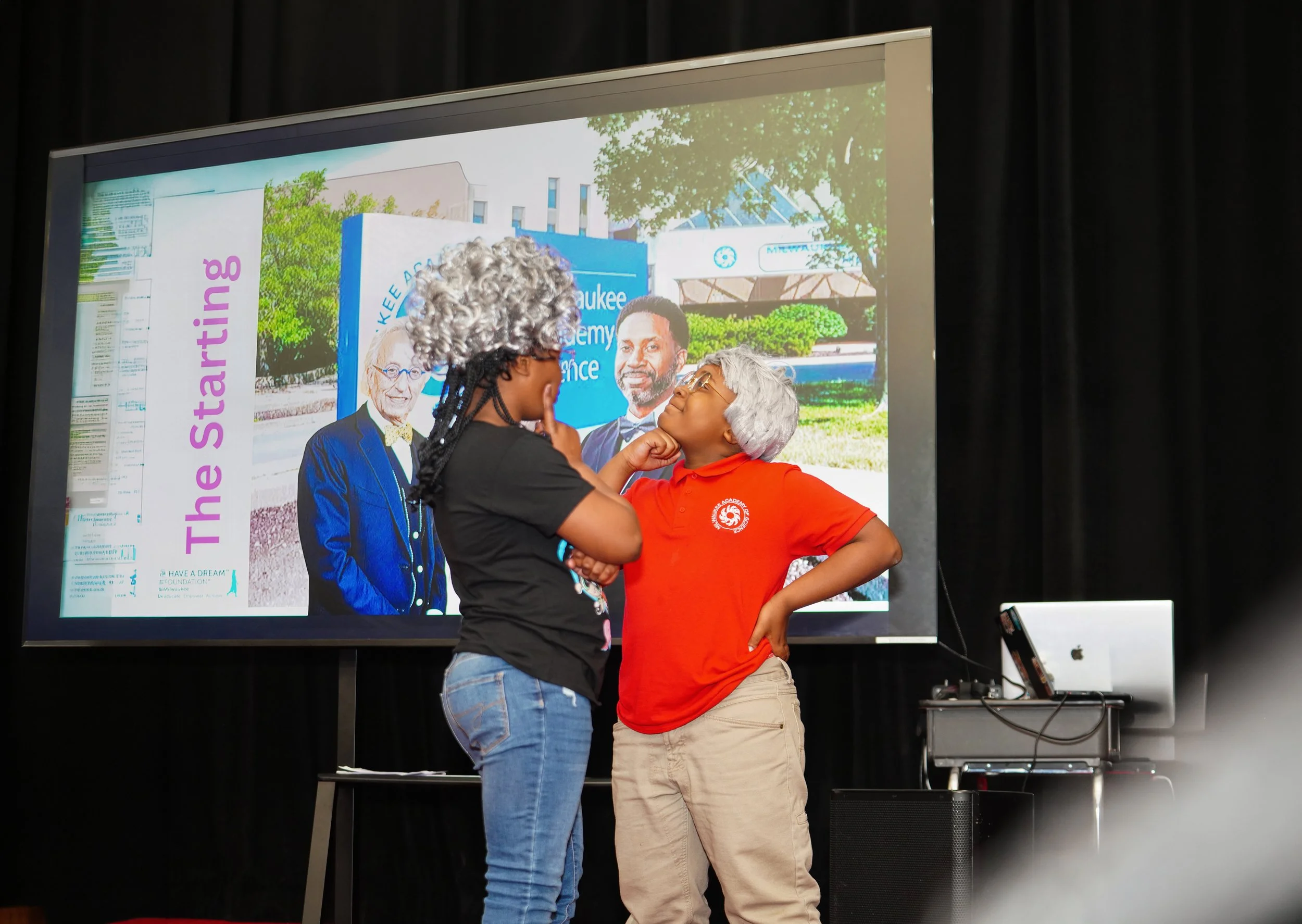
The Milwaukee chapter of the I Have a Dream Foundation (IHDF-Milwaukee) began its work in 2007, welcoming its first cohort of first-grade students at Clarke Street School. From the beginning, the organization made a long-term commitment to walk alongside students as they grew, providing the academic support, resources, and financial assistance needed to pursue college, technical school, and opportunities beyond high school.
Over the next 16 years, IHDF-Milwaukee remained connected to that first cohort, supporting students from elementary school through their post-secondary journeys. As those students grew into young adults and many completed college, technical school, and other post-secondary programs, the organization prepared to begin a new chapter.
In 2023, IHDF-Milwaukee welcomed a new cohort of students at Milwaukee Academy of Science. The expansion was made possible in part through a $4 million fundraising campaign led by IHDF national board member Barry Mandel and IHDF-Milwaukee board chair and Legacy Bank founder Margaret Henningsen.
With this new cohort came an expanded vision for the organization’s work. While academic achievement and post-secondary success remain central to the mission, IHDF-Milwaukee has grown to recognize that supporting a student also means supporting the family and community surrounding them.
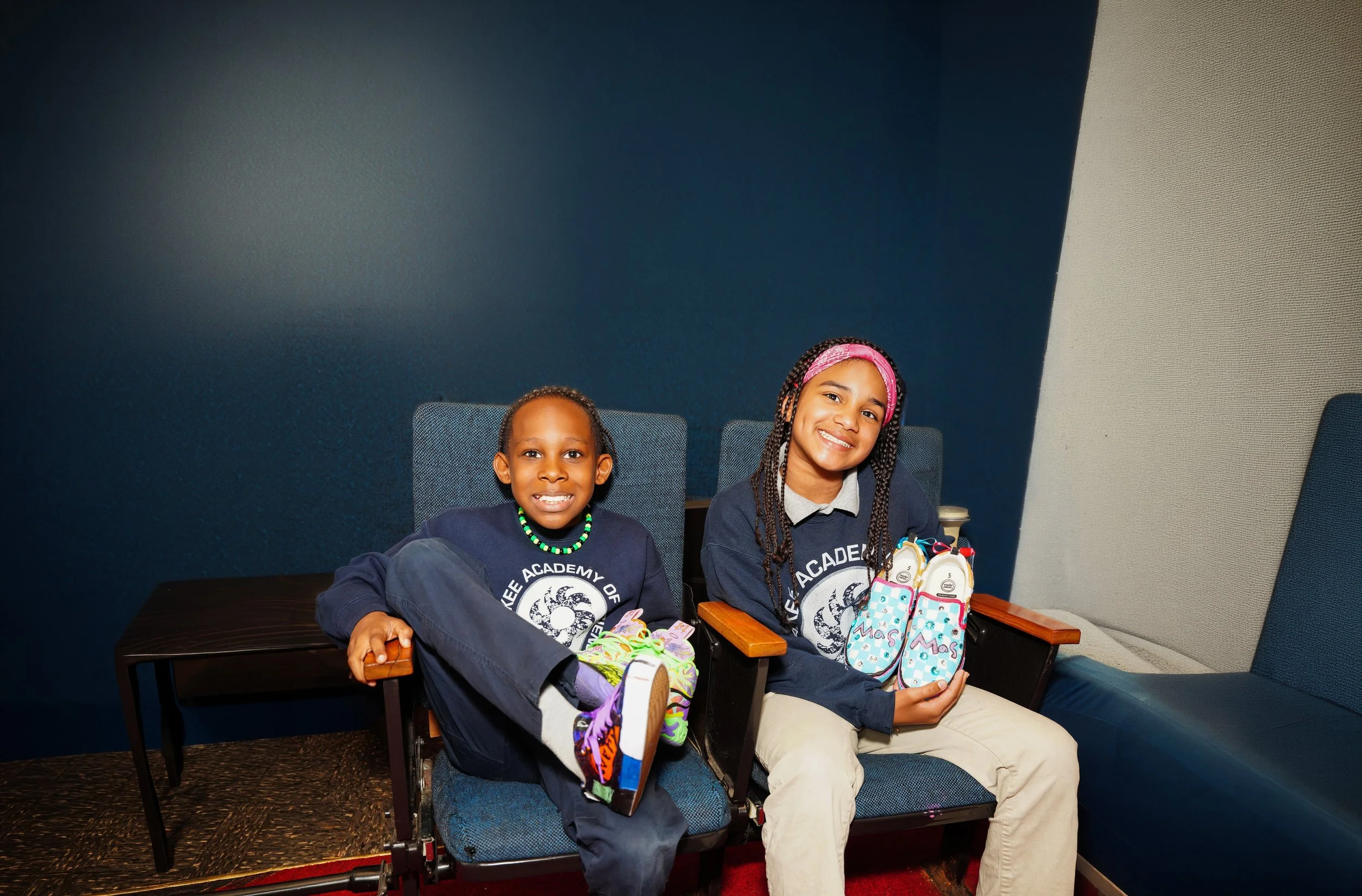
Today, our Dream Scholars are in fifth grade, continuing a journey that began when they were first graders. As they grow, IHDF-Milwaukee continues to grow alongside them, providing long-term academic support, meaningful opportunities, strong relationships, and resources for both students and their families.

Our journey
Today, our Dream Scholars are in fifth grade, continuing a journey that began when they were first graders. As they grow, IHDF-Milwaukee continues to grow alongside them, providing long-term academic support, meaningful opportunities, strong relationships, and resources for both students and their families.